If you are drawn to homes that feel rooted in the desert instead of dropped onto it, Paloma Vista and Paloma Encanto stand out for a reason. These two La Paloma enclaves show how architecture, lot layout, and landscape can work together to create a distinct sense of place. If you are comparing homes here, understanding that character can help you read beyond square footage and finishes. Let’s dive in.
La Paloma Sets the Design Tone
Paloma Vista and Paloma Encanto are two of the ten sub-associations within La Paloma, a master-planned community of 856 homes at the base of the Santa Catalina Mountains. La Paloma also maintains a Design Review Modification Committee, which points to a managed approach for exterior changes and additions.
That framework matters because it helps explain why these neighborhoods feel cohesive without feeling repetitive. You are not looking at a one-plan subdivision. Instead, you see a shared desert-resort identity shaped by design standards, topography, and the surrounding golf and mountain setting.
Catalina Foothills Influence Is Strong
The broader Catalina Foothills planning context helps define what you experience in both enclaves. The City of Tucson’s Catalina Foothills Subregional Plan emphasizes scenic resources, preservation of native vegetation and washes, and development that conforms to natural topography.
In practical terms, that means the architecture here is tied closely to the land. Views, shade, privacy, and outdoor living are not afterthoughts. They are central parts of how homes in Paloma Vista and Paloma Encanto are positioned and lived in.
Paloma Encanto Feels Courtyard-Forward
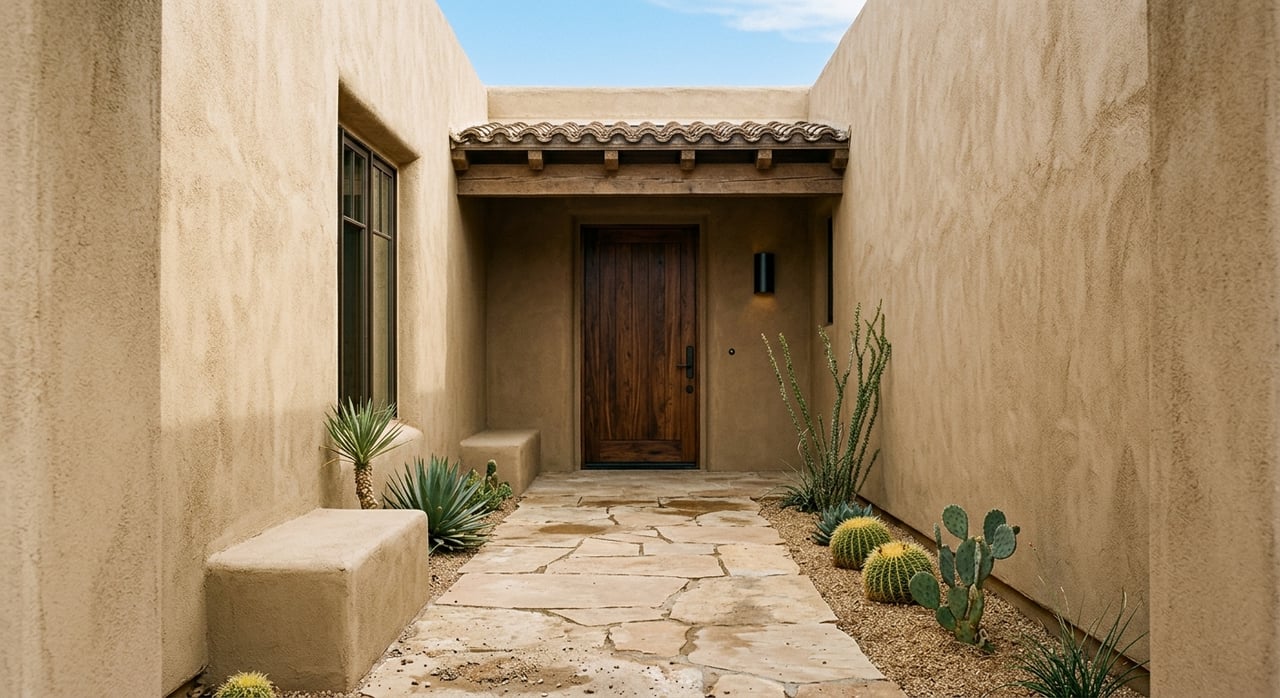
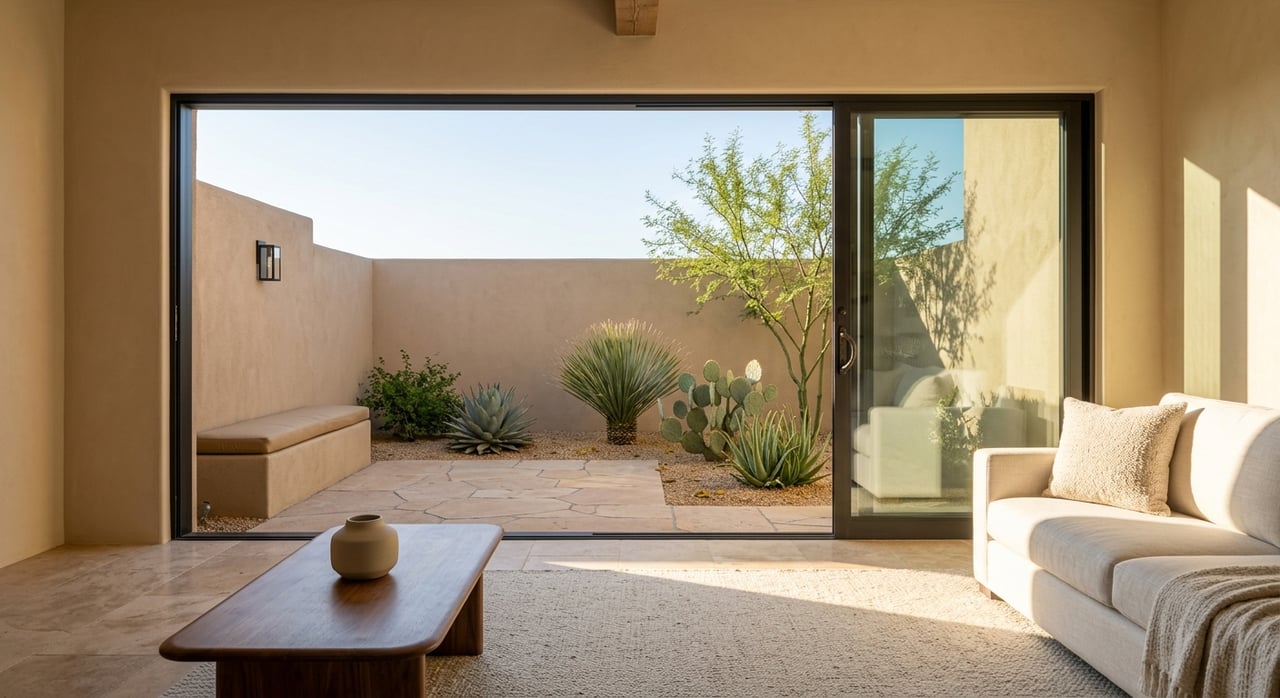
Paloma Encanto tends to read as the more enclosed and contemporary-leaning enclave in the current sample of listings. Recent and current homes described there often highlight patio-home living, private exterior spaces, and a strong indoor-outdoor connection.
Features that show up repeatedly include soaring or vaulted ceilings, fireplaces, built-ins, covered patios, front-gated courtyards, mountain views, and picture windows. Some listings also mention exposed wood beams, decorative fireplaces, mature desert landscaping, and split floor plans.
What makes Encanto interesting is that its contemporary feel is not stark or overly minimal. Listings reference finishes like granite, porcelain or ceramic tile, and custom wood cabinetry, which soften the look and keep it aligned with the desert setting.
There is also real variety within the enclave. The sample includes both single-story and two-story layouts, along with different lot positions and orientations. So while contemporary design is a clear theme, it is more accurate to think of Paloma Encanto as a compact neighborhood with a contemporary desert-resort vocabulary, not a one-style collection.
Paloma Vista Blends Mission and Modern
Paloma Vista appears slightly more mixed in style. In the recent listing sample, you see mission-style influence alongside remodeled interiors with a more open and updated feel.
One listing describes a mission-style home on a golf-course lot with Saltillo tile, plantation shutters, and a landscaped patio and yard. Others emphasize open-concept interiors, picture windows, flagstone patios, and low-care backyards, which suggest a blend of original desert architecture and later renovation.
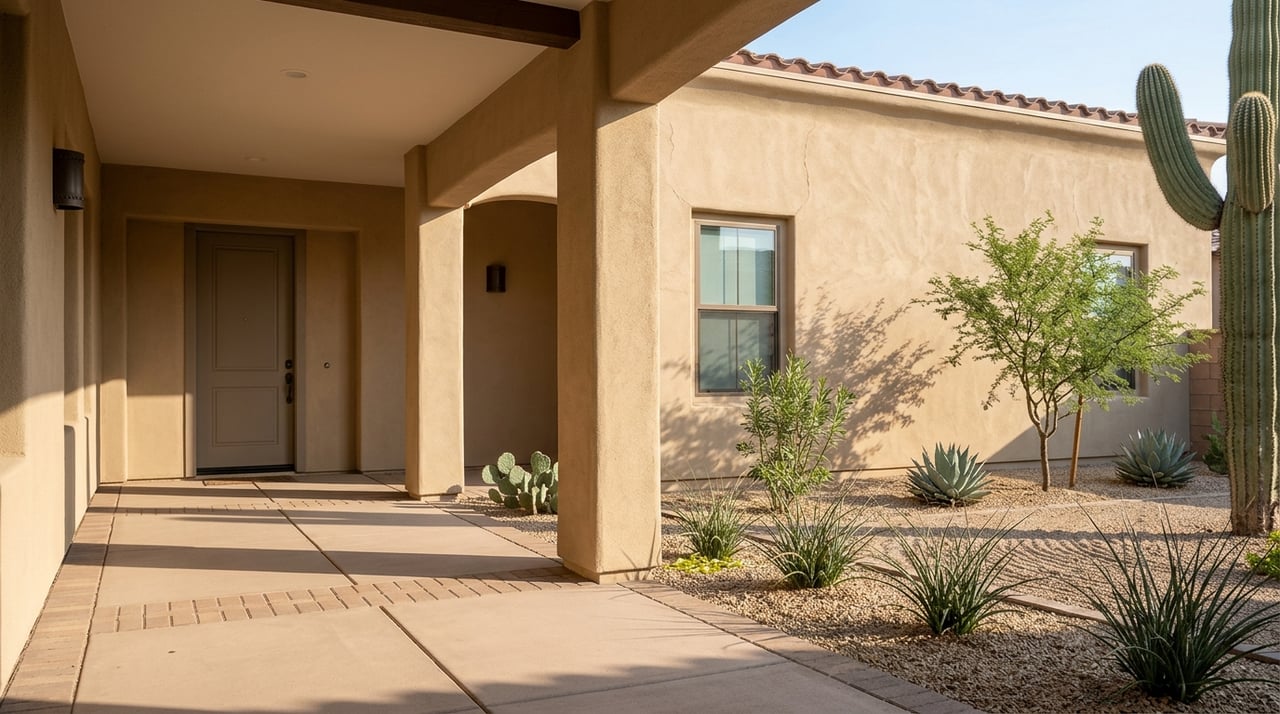
This creates a neighborhood character that feels settled and layered. Many of the homes in the sample were built in 1994 to 1995, and recurring construction details include frame-with-stucco exteriors, tile roofs or built-up roofs, and covered outdoor spaces.
That era and material palette help Paloma Vista feel cohesive without looking uniform. If you are someone who likes a home with classic foothills cues but also appreciates modern updates, Vista often fits that conversation well.
Shared Design Themes Across Both
Even with stylistic differences, Paloma Vista and Paloma Encanto share several architectural threads. These common elements are a big part of what makes both enclaves feel connected to the larger La Paloma identity.
Here are some of the most consistent themes in the research sample:
- Low-slung massing and a generally low-rise scale
- Single-level or one-and-a-half-level living, with some two-story homes mixed in
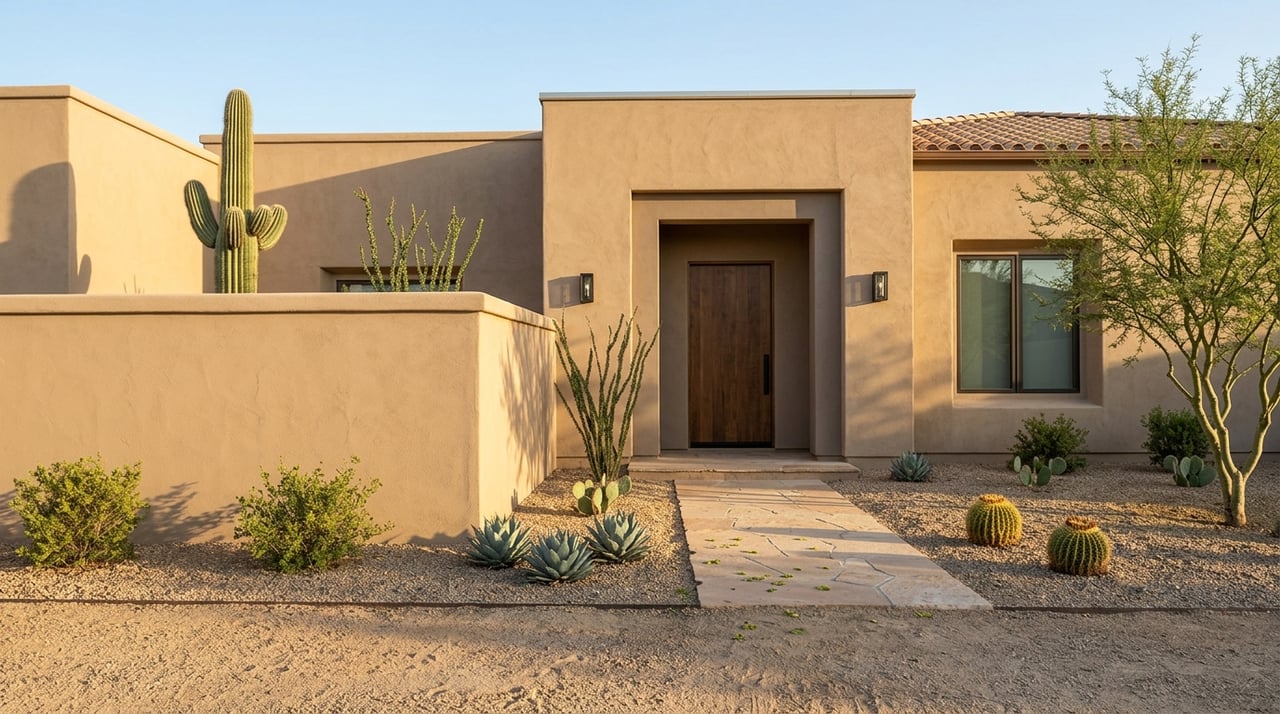
- Stucco or frame-with-stucco exterior walls
- Tile roofs or similar low-profile roof forms
- Courtyards and covered patios
- Fireplaces and picture windows
- Low-care desert landscaping
The most important point is that ornament is not the main story here. These homes are often defined more by how they handle light, shade, privacy, and outdoor rooms than by decorative detailing alone.
Streets and Lots Shape the Experience
The official La Paloma map adds another layer to the story. Paloma Encanto appears as a compact, curving enclave arranged around internal drives and fairway edges, while Paloma Vista reads as somewhat narrower and more linear, organized around E Calle Cayo.
That difference in street pattern affects how each neighborhood feels when you move through it. Encanto can feel more tucked-in and intimate, while Vista often reads as more directly connected to golf-front and view-oriented positioning.
In both enclaves, the street layouts are curvilinear rather than grid-based. Lots are shaped by golf edges, common-area buffers, and the natural desert terrain, which reinforces the sense that these are site-driven neighborhoods rather than generic suburban blocks.
Orientation Matters in Tucson
In a climate like Tucson’s, architectural character is never just about style. It is also about performance. The Arizona State Climate Office reports mean maximum temperatures of 101.2 degrees in June, 100.2 in July, and 98.6 in August, with annual precipitation of 10.61 inches.
Those numbers help explain why covered patios, shaded entries, courtyards, and low-water landscaping appear so often in these homes. They are practical responses to heat, sun, and seasonal weather, and they also shape daily comfort.
Lot orientation also matters. Some sample listings specifically note north/south exposure, while others highlight golf-course lots or common-area adjacency. In this part of Tucson, orientation influences sunlight, shade patterns, and view corridors in ways buyers often notice right away.
Outdoor Rooms Are Central Here
In Paloma Vista and Paloma Encanto, outdoor space is not just leftover yard area. The research points to a patio-home scale, with lots in the sample generally ranging from about 4,600 to 8,300 square feet, which makes the design of exterior rooms especially important.
That is why you see recurring features like front courtyards, covered patios, built-in barbecues, flagstone seating areas, and low-care landscaping. These elements let outdoor living feel intentional and usable without demanding estate-sized grounds.
For many buyers, that balance is part of the appeal. You get meaningful outdoor enjoyment, mountain or golf-oriented views in some locations, and a more manageable footprint than a larger foothills property might require.
What Makes Each Enclave Distinct
If you are trying to separate the two in your mind, a simple comparison helps.
| Enclave | General Character | Common Style Cues | Site Feel |
|---|---|---|---|
| Paloma Encanto | More enclosed, courtyard-forward | Contemporary and contemporary-renovated finishes, vaulted ceilings, picture windows, gated entries | Curving streets, compact lots, golf-edge and view-conscious placement |
| Paloma Vista | Slightly more linear, settled feel | Mission-style elements, Saltillo tile, updated open interiors, stucco and tile-roof palette | Golf-fronting patterns, linear organization, low-rise patio-home scale |
Neither enclave is defined by a single formula. The stronger truth is that both express the same desert-resort mindset in slightly different ways.
Why This Matters When You Buy or Sell
For buyers, architectural character helps you narrow your search faster. If you prefer a more courtyard-centered and contemporary feel, Paloma Encanto may deserve a closer look. If you like mission influence with updated interiors and a settled golf-front setting, Paloma Vista may speak to you more directly.
For sellers, the takeaway is just as important. Homes in these enclaves are often best understood through their relationship to the site, not just their feature list. Orientation, patios, views, shade, and the way the home meets the desert landscape can be central to how buyers perceive value.
That is where hyper-local marketing matters. In a neighborhood like La Paloma, the story is often in the details that only show up when someone understands the micro-market block by block and enclave by enclave.
If you are thinking about buying or selling in La Paloma, working with someone who understands how these subtle differences shape demand can make your next move much clearer. When you want neighborhood-specific insight and direct, boutique representation, connect with James Storey.
FAQs
What architectural style is most common in Paloma Encanto?
- Paloma Encanto most often shows a contemporary or contemporary-renovated look in the current listing sample, with features like vaulted ceilings, picture windows, courtyards, covered patios, and indoor-outdoor flow.
What architectural style is common in Paloma Vista?
- Paloma Vista appears more stylistically mixed, with mission-style influence, stucco exteriors, tile roof forms, and remodeled interiors that often add more open contemporary living spaces.
Are Paloma Vista and Paloma Encanto made up of identical homes?
- No. The research shows meaningful variation in layout, finish level, and architectural expression, even though both enclaves share a cohesive desert-resort character.
How do homes in these La Paloma enclaves connect to outdoor living?
- Homes commonly use courtyards, covered patios, fireplaces, low-care yards, picture windows, and view-oriented placement to extend living space into the outdoors.
Why does lot orientation matter in Paloma Vista and Paloma Encanto?
- Lot orientation can affect shade, sunlight, heat exposure, and view lines, which are especially important in Tucson’s hot climate and foothills setting.
What makes these two La Paloma neighborhoods visually distinct?
- Their visual identity comes from a combination of architecture, curved or linear street patterns, compact patio-home lots, golf or common-area edges, and a strong connection to the desert landscape and mountain backdrop.