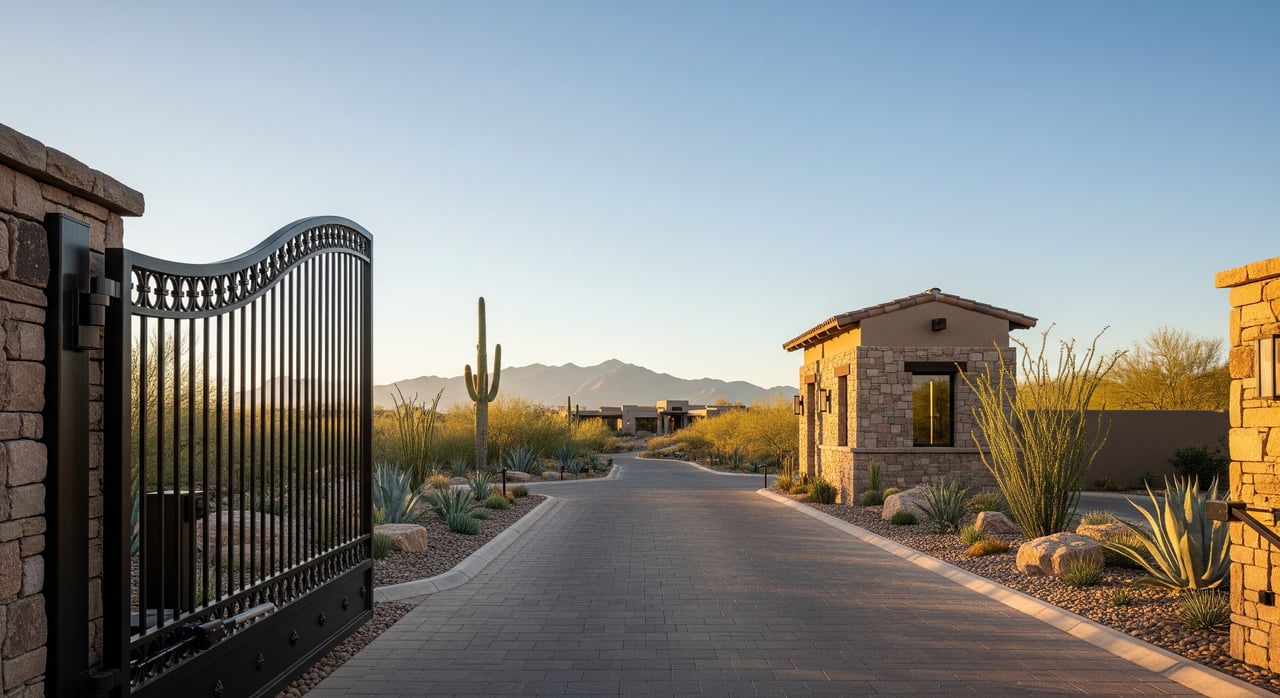
Wondering what gated living in Las Palomitas really looks like day to day? You want privacy and a polished streetscape, but you also want clarity about rules, fees, guests, and deliveries. In this guide you will learn how gates operate in the Catalina Foothills, what HOAs cover, lifestyle tradeoffs near the club, and the due diligence steps that help you buy with confidence. Let’s dive in.
Where Las Palomitas fits
Las Palomitas sits in the Catalina Foothills within zip code 85718 in Pima County. The area features foothill terrain, wide views toward the Tucson valley and the Santa Catalina Mountains, and a mix of single‑family homes on varied lot sizes. Gated communities here range from small enclaves with a single automated gate to larger planned neighborhoods with staffed entries and shared amenities.
In this part of the Foothills, many gated communities emphasize view protection, desert landscaping standards, and architectural guidelines. Most are governed by CC&Rs and an HOA or community association. Rules and enforcement vary, so you will want to review the exact documents for any home you consider in Las Palomitas or nearby 85718 communities.
How gates work day to day
Access control basics
Gate setups in the Foothills tend to fall into a few categories. Some communities use unmanned automated gates with resident remotes, keypads, or smartphone apps. Larger developments sometimes staff a gatehouse during set hours or around the clock. Others combine daytime staffing with electronic controls after hours.
You will also see electronic visitor management. That can include temporary numeric codes, QR codes, callbox intercoms, or an HOA portal where you add guests for a time window. These systems work well when maintained and monitored.
Guest entry and peak times
If a community uses a web or mobile portal, you may preregister guests to speed entry. In smaller enclaves, guests often use a callbox to reach you at the gate. That can be quick most days, but it may slow down during evening events or holidays.
Peak delays can happen around social functions or shift changes at a staffed gate. Ask the HOA or management about typical wait times and whether they adjust staffing or procedures during high‑traffic periods.
Deliveries and contractors
Mail and parcel delivery policies vary by community. USPS may deliver to centralized boxes or receive direct access, which is set by the HOA and local postal arrangements. Parcel carriers like UPS, FedEx, and Amazon often use intercoms, temporary codes, or approved access lists. Some communities ask residents to meet couriers at the gate.
Service providers such as landscapers or pool companies are commonly placed on approved vendor lists. HOAs may require vendor insurance and gate registration. If you rely on frequent deliveries or regular home services, verify the specific procedures and any homeowner responsibilities.
Emergency access and safety
Most gated communities coordinate with local fire, EMS, and law enforcement for gate overrides. Systems may include emergency vehicle features or Knox Boxes. While protocols are designed to minimize delays, gates can add seconds or minutes if a system fails or staffing is unavailable.
Ask the HOA for its documented emergency access procedures and whether local responders are familiar with the system in use. You can also confirm how the Pima County Sheriff or Tucson Police handle access for the neighborhood’s jurisdiction.
HOA rules, upkeep, and costs
Governance and CC&Rs
In the Foothills, most gated neighborhoods are managed by an HOA led by a board of volunteer owners. Many hire a professional management company for day‑to‑day operations. The CC&Rs and rulebook address architectural standards, landscaping requirements, parking rules, pet policies, noise limits, and how amenities can be used.
Enforcement tools can include compliance notices and fines. Before you buy, obtain the CC&Rs, rulebook, and any recent amendments to understand what is allowed and how rules are applied.
Assessments and reserves
HOA assessments fund operations and reserves. Typical line items include gate maintenance, landscaping, common‑area utilities, staffing, insurance, and savings for future repairs. Healthy reserves help avoid special assessments when big items like gates, roadwork, or clubhouse components need replacement.
Request the current budget, the most recent reserve study if available, and the past few years of financial statements. Review contract terms for key services to see how costs are controlled over time.
Insurance and liability
The HOA carries property and liability insurance for common areas. Homeowners carry individual policies for their own dwelling and personal property. Confirm where the association’s coverage ends and what you are responsible for as an owner.
Gates and gate equipment can involve risk, such as vehicle damage or injury. Ask for any available incident history or insurance claim trends related to the gate system. This helps you judge both safety and potential cost exposure.
Transparency to expect
Strong associations are transparent. Ask for recent board meeting minutes, the meeting schedule, financial statements for the past two to three years, and a list of recent or outstanding special assessments. Request copies of maintenance contracts for gates, landscaping, and any pools, along with any pending litigation disclosures or summaries of enforcement activity.
Lifestyle near the club
In larger gated settings, a clubhouse can shape the rhythm of daily life. Activity often centers on fitness classes, pool time, tennis or pickleball, and scheduled social events. Traffic near the clubhouse tends to rise in predictable patterns, like holidays and summer weekends.
Many communities include quiet hours and event rules in their CC&Rs. These reduce unplanned noise while allowing scheduled activities. If you value a lively social calendar, an active clubhouse can be a plus. If you prefer a quieter setting, confirm how far the home sits from primary amenities and typical event spaces.
HOA rules in the Foothills often protect view corridors and require desert‑appropriate landscaping. If you plan outdoor upgrades or specific yard designs, check the architectural guidelines so you know what approvals you will need.
Pros and tradeoffs
Benefits buyers often value
- Perceived privacy and security due to limited access and controlled entry.
- Consistent streetscapes and landscaping maintained by the HOA.
- Managed amenities, such as a clubhouse, pool, or courts, when present.
- In some markets, scarcity and perceived exclusivity may support property values.
Common tradeoffs to weigh
- Ongoing HOA fees and the possibility of special assessments.
- Rules that limit exterior changes, colors, features, fencing, or visible solar arrays in some communities.
- Added steps for guests, extended family, frequent deliveries, or large gatherings.
- Potential friction if HOA governance or enforcement is weak or inconsistent.
Gated vs non‑gated in 85718
Your daily routine should guide your choice. Gates can add small delays when you return home and can create extra steps for visitors. If you host often or manage several service providers, consider how access will work for your lifestyle.
Resale demand in the Catalina Foothills includes buyers who prefer gated privacy and others who want fewer HOA constraints. Ask a local advisor to compare recent sales between gated and nearby non‑gated properties. Also confirm any HOA insurance requirements and emergency response protocols to align with your risk comfort.
Expect high standards for landscaping, lighting, and road upkeep in many Foothills neighborhoods. Clarify who pays for each element, how reserves are funded, and how often contracts are bid or renewed.
Buyer due‑diligence checklist
Use this checklist to bring clarity to any Las Palomitas or 85718 gated home you are considering:
- Obtain and read the CC&Rs, bylaws, rules, and recent amendments.
- Request the HOA budget, reserve study if available, and the last two to three years of financial statements.
- Ask for the current assessment amount, billing schedule, and a history of special assessments.
- Review recent HOA meeting minutes and note board stability, turnover, or disputes.
- Confirm gate type, maintenance schedule, vendor contract, and expected replacement timeline and costs.
- Confirm mail and parcel delivery arrangements, including any homeowner tasks.
- Ask about documented emergency access procedures and local responder coordination.
- Verify amenity rules, guest policies, rental rules if you plan to rent, and pet restrictions.
- Request disclosures for any pending litigation or insurance claims involving the association.
- Visit at different times, such as weekday mornings and weekend evenings, to observe guest traffic, gate wait times, and clubhouse activity.
- Consult a local real estate agent for recent gated versus non‑gated sales comparisons in 85718 and the broader Catalina Foothills.
- If possible, attend an HOA meeting or speak with residents about daily experience.
Make a confident move
Gated living in Las Palomitas and the Catalina Foothills can deliver privacy, consistency, and a clubhouse‑centered lifestyle, provided the gate system runs smoothly and the HOA is financially sound. The keys are clear rules, reliable maintenance, and transparent governance. With the right due diligence, you can decide whether a gated home in 85718 fits your routine and goals.
If you want hyper‑local guidance and a negotiation‑first plan tailored to your needs, connect with James Storey to schedule a private consultation.
FAQs
What does “gated” mean in Las Palomitas?
- In 85718, gated often means a single entry with an automated gate or staffed gatehouse, controlled access for residents and guests, and HOA rules set by CC&Rs.
How are guests handled at the gate?
- Guests are commonly preregistered through an HOA portal or use a callbox to reach you; peak delays can occur during events or busy hours.
Will delivery services reach my home?
- USPS and parcel carriers typically access through codes, intercoms, or approved lists; some communities use centralized mailboxes or request resident coordination.
Do gates slow emergency response times?
- Communities coordinate with fire, EMS, and law enforcement and use override systems, though failures can add brief delays, so ask for the documented plan.
What HOA costs should I expect?
- Assessments fund gate operations, landscaping, common‑area utilities, insurance, and reserves; ask for budgets, reserve studies, and any special assessment history.
Are there restrictions on exterior changes?
- CC&Rs often include architectural guidelines that may limit exterior colors, features, fencing, or visible solar arrays, with an approval process for changes.