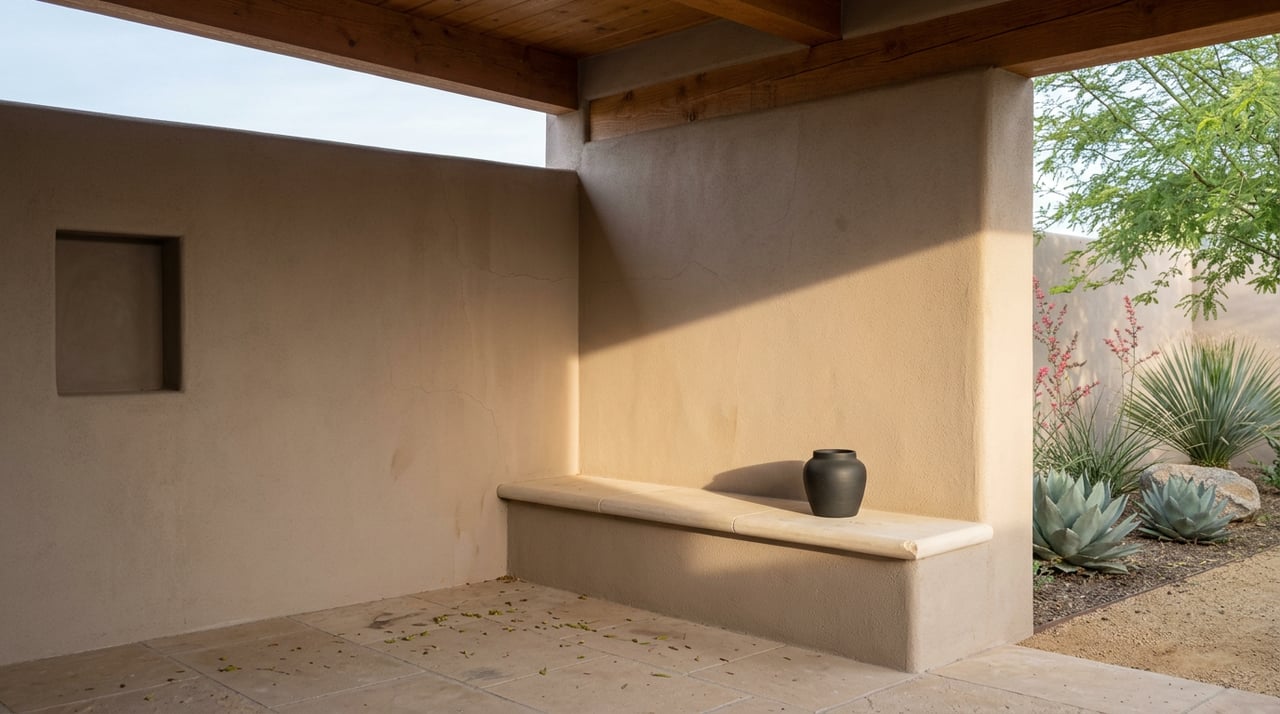
The most instructive listing in Ridge Estates right now is not a house. It is a pair of adjacent elevated homesites offered as a single transaction, with a clause requiring both parcels to close simultaneously. A buyer can combine them for one large estate or build two homes for extended family, and each lot permits a guest house. That single line in the MLS tells you more about how Ridge Estates actually trades than any median-price chart on a portal.
Ridge Estates sits behind La Paloma's guard gate, reached from Sunrise and Swan up Via Palomita. The community is small, elevated, and organized around golf-course frontage and view corridors. What separates it from most Foothills enclaves is that its inventory bifurcates into two very different products: a shrinking supply of vacant "final parcels" being marketed for custom builds, and a set of already-built architect-signed residences pricing the design and permitting risk into the sale. Deciding between the two is not a question of dollars per square foot. It is a question of what you are willing to trade for a specific view lot, and how much of the next thirty months you are prepared to spend on it.
The thesis a portal search will not surface
A finished Ridge Estates home is expensive because someone already absorbed the site work, the design cycle, the permitting review, and the Foothills-specific surprises that show up between excavation and certificate of occupancy. A vacant lot is cheap by comparison because none of that has happened yet. The gap between the two prices is not margin. It is a schedule of future work you either pay a previous owner to have completed, or you sign up to manage yourself.
That reframing matters because the remaining Ridge Estates lots are being marketed with sample floor plans and view renderings, which invites buyers to picture a finished result at the lot price. The finished result is a separate number.
What the lots actually cost, once you finish them
Custom construction in Tucson runs a wide range depending on scope and finish. For the Foothills, the credible working numbers look like this:
| Cost layer | Range | Notes |
|---|---|---|
| Tucson custom structure (typical) | $175–$295 per sq ft | Excludes land and sitework |
| High-end Foothills luxury finish | $340+ per sq ft | Resort outdoor living, passive solar, custom millwork |
| Arizona custom, mid to upper range | $300–$550 per sq ft | Statewide 2026 range |
| Foothills hillside scenario, 6,500 sq ft | $5M to $7M+ construction | Grading, retaining walls, steel glazing, pool; excludes land and soft costs |
| Timeline from first idea to move-in | 12 to 30 months | 13 to 19 months is the common Tucson band |
Applied to Ridge Estates, a 4,000 square foot Foothills build at a defensible mid-range of $400 per foot is roughly $1.6M in vertical construction before land, before soft costs, and before the site work the raw price does not include. On a listing where the remaining parcels sit in the sub-million range, the finished total lands well above the lot price alone and, for a hillside view lot with meaningful grading, meets or exceeds the price of a finished Campisano-designed residence already sitting on the golf course.
That is the arithmetic a buyer should run before signing on a lot.
The Foothills site work layer
The construction cost per foot is only the visible number. The Catalina Foothills adds a layer of site friction that shows up in change orders, not in the base bid. The features to price into any Ridge Estates lot decision include:
- Caliche. The cemented hardpan under much of the Tucson basin is nearly impermeable and difficult to excavate, requiring jackhammering or hydro-excavation for foundation trenches and utility runs.
- Subsurface boulders. Piedmont alluvial fan deposits in the Foothills can hide debris-flow boulders that are not visible at the surface and are not predictable without borings.
- Hillside overlay zoning. The City of Tucson administers hillside overlay rules in the Foothills that govern grading, cut-and-fill, and wall heights.
- Drainage jurisdiction. Lots in or near a mapped arroyo fall under the Pima County Regional Flood Control District, which brings its own review process.
- Geotechnical work. Soil borings before finalizing foundation design are the responsible path on any Foothills lot outside a well-characterized subdivision.
- Financing sequencing. Construction lenders will not release funds until the buyer owns the land and holds permitted plans, which puts the lot purchase and design cycle in front of the money that pays for the house.
- Design review. Ridge Estates sits inside La Paloma's governance structure, which layers its own architectural review on top of city permitting.
None of these items appears in a per-square-foot quote. Each of them can add tens of thousands of dollars, or more, and each can extend the timeline. A schedule of 12 to 30 months from first sketch to move-in is a range, and Foothills hillside work sits at the long end.
What a finished Ridge Estates home already prices in
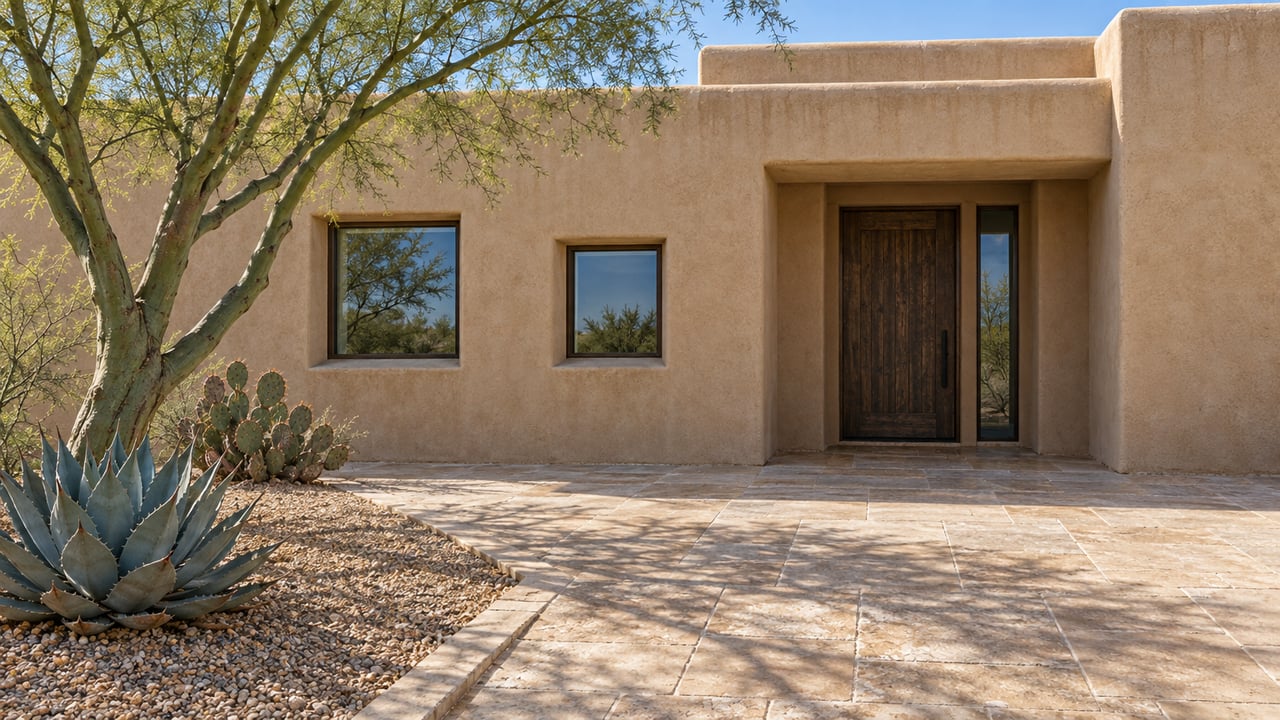
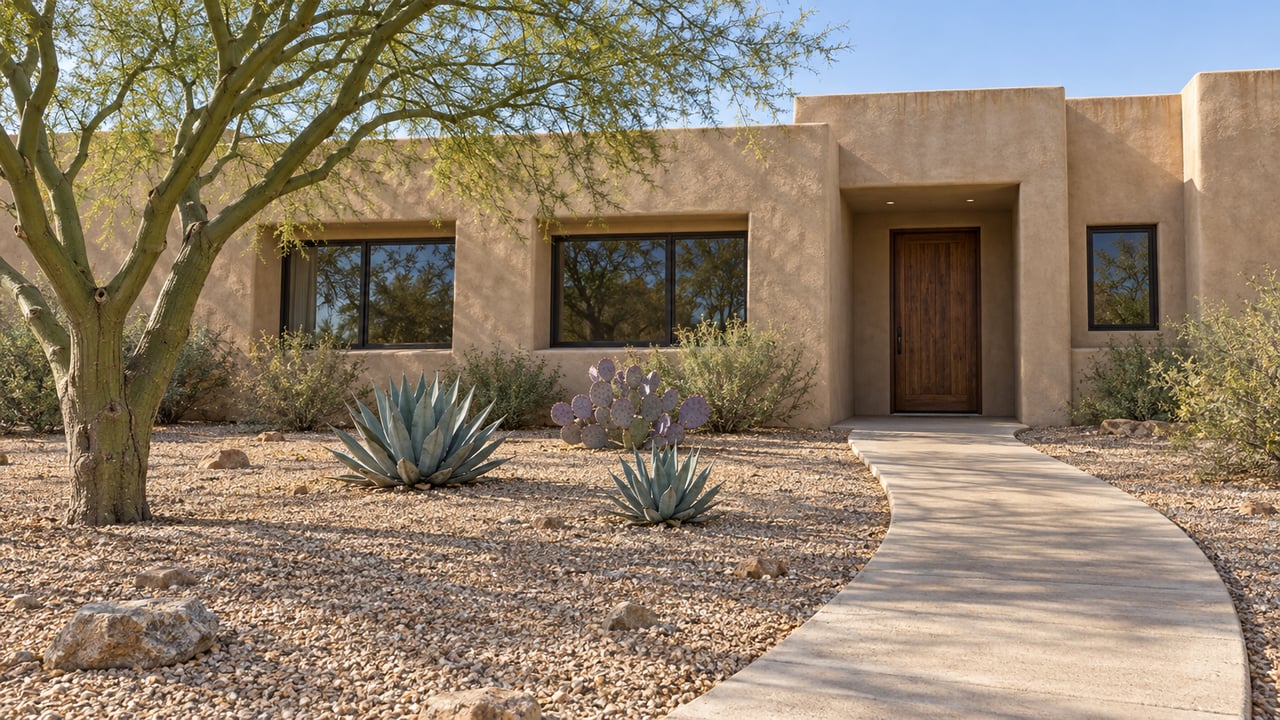
The current supply of built product in Ridge Estates tells the other half of the story. Homes here run larger than the county norm. In the subset marketed as Ridge Estates I, the average finished size is roughly 3,129 square feet against a Pima County average of 1,938 square feet. Recent listings include a five-bedroom John Campisano design on Camino Montecillo with 180-degree views spanning the University of Arizona, the downtown skyline, La Paloma's fairways, and the surrounding mountains. That home carries an entry price that reflects an architect commission already paid, a hillside foundation already engineered, and a view corridor already secured.
The premium over a raw lot is not sentimental. It is the accumulated cost of everything a buyer would otherwise be signing up to do.
When building still wins
Building on one of the final parcels is the right move in three narrow situations.
The first is when a specific view or elevation is not represented anywhere in the built inventory. Ridge Estates has a finite number of high sites, and the remaining lots include some that a buyer could not replicate by buying.
The second is the paired-lot mechanic. The requirement that adjacent parcels close simultaneously creates the possibility of assembling a family compound with a main house and a guest house on each side, or a single estate with a larger footprint than any existing home in the community. That is a use case a finished house cannot deliver.
The third is when a buyer has the time. If the household can absorb 18 to 30 months of design, permitting, and construction, and can carry both a lot loan and eventual construction financing through that period, the total cost delivered against a fully custom brief may compare favorably to a finished home that requires later remodeling to match the same brief.
Outside those three cases, the finished stock is usually the better transaction. The seller has already priced the risk. The buyer is paying for a known result on a known timeline.
Quick FAQ
Can a buyer secure a construction loan before closing on the lot? Not in a way that funds the build. Construction lenders in Arizona typically require the borrower to own the land and to hold permitted plans before releasing draws. That sequence puts the lot purchase, design work, and permitting in front of the construction money.
How firm is the Ridge Estates "final parcels" language? The community was platted and largely built out over decades, and current listings describe the remaining vacant sites as among the last available inside the guard gate. Scarcity is real, but a lot's marketability still depends on its specific slope, orientation, and view.
What is the practical construction timeline for a Ridge Estates build? Plan on 12 to 30 months from first design meeting to move-in, with 13 to 19 months as the common Tucson band. Hillside sites, custom steel glazing, extensive outdoor living, and any surprises in caliche or boulders push toward the longer end. La Paloma's own design review adds process on top of city permitting.
Working the decision with an advisor
The Ridge Estates buy-versus-build question is a comparison of two specific paths, priced against one specific lot or one specific home, with the site work and timeline built into the math. A generic per-square-foot number is not enough to make that call. Neither is a portal median. The right analysis puts a real lot, a real geotech risk, a real design brief, and a real finished comparable on the same page.
That is the analysis James Storey runs with clients who are weighing the last parcels in Ridge Estates against the finished custom stock inside the same gate. Schedule a private consultation to walk through the current inventory, price the true delivered cost of each path, and decide which one fits the household, the timeline, and the view you actually want.